 PT
 EN
 ES

A vast wetland ecosystem, it is a sanctuary of biodiversity, wildlife thrives in abundance. For those seeking to delve into this natural space, tracking animal footprints emerges as an invaluable skill. It not only allows for spotting elusive creatures but also offers a profound connection with the environment and its inhabitants. Mastering the art of track reading transforms a simple walk into an expedition of discovery. Each mark in the mud or sand tells a story, revealing the passage of mammals, reptiles, and birds. This guide will introduce you to the fascinating world of tracking in the Northern Pantanal, preparing you to unravel the secrets the land holds.
A vast wetland ecosystem, it is a sanctuary of biodiversity, wildlife thrives in abundance. For those seeking to delve into this natural space, tracking animal footprints emerges as an invaluable skill. It not only allows for spotting elusive creatures but also offers a profound connection with the environment and its inhabitants.
Mastering the art of track reading transforms a simple walk into an expedition of discovery. Each mark in the mud or sand tells a story, revealing the passage of mammals, reptiles, and birds. This guide will introduce you to the fascinating world of tracking in the Northern Pantanal, preparing you to unravel the secrets the land holds.

Discover the Fascinating World of Northern Pantanal Animal Tracks
Brazil’s Northern Pantanal is a tapestry of wildlife, an ecosystem that invites exploration through its countless trails and streams. Tracking animal footprints emerges as one of the most rewarding and educational ways to experience its rich biodiversity. Each mark left on the ground is a clue, a silent testament to the movements of creatures that inhabit this vast territory, from the imposing jaguar to the agile capybara.
Identifying these tracks not only enriches the visitor’s experience but also contributes to science and conservation. It allows researchers and enthusiasts to monitor populations, understand migration and behavior patterns, and detect the presence of rare or endangered species. A tracking guide in Brazil, especially focused on the Northern Pantanal, thus becomes an essential tool for appreciating the complexity and fragility of this unique biome.
Essential Tracking Guide in Brazil: How to Identify Northern Pantanal Animal Tracks
Effective tracking in the Northern Pantanal relies on detailed observation and understanding the characteristics that define each track. When examining a mark on the ground, it is crucial to pay attention to its size, general shape, the number of visible toes, and the presence or absence of claw marks. These features, combined with the context of the environment, such as soil type, surrounding vegetation, and proximity to water sources, offer vital clues for identification.
For example, the shape of the heel pad, the distance between tracks (stride), and the alignment of the paws can help distinguish between different species. Tracks of ungulates, such as the marsh deer, are usually cloven and elongated, while those of felines are more rounded and often do not show claw marks, as they are retractable. Patience and practice are fundamental; each field outing refines the ability to interpret these natural signs.
In addition to the intrinsic characteristics of the track, the immediate environment provides crucial information. The presence of droppings, prey remains, scratch marks on trees, or well-defined game trails are additional indicators that corroborate track identification and help infer the animal’s recent activity. A good tracker learns to read the complete story that the trail narrates.
| Animal | Characteristic Track | Approximate Size | Additional Notes |
|---|---|---|---|
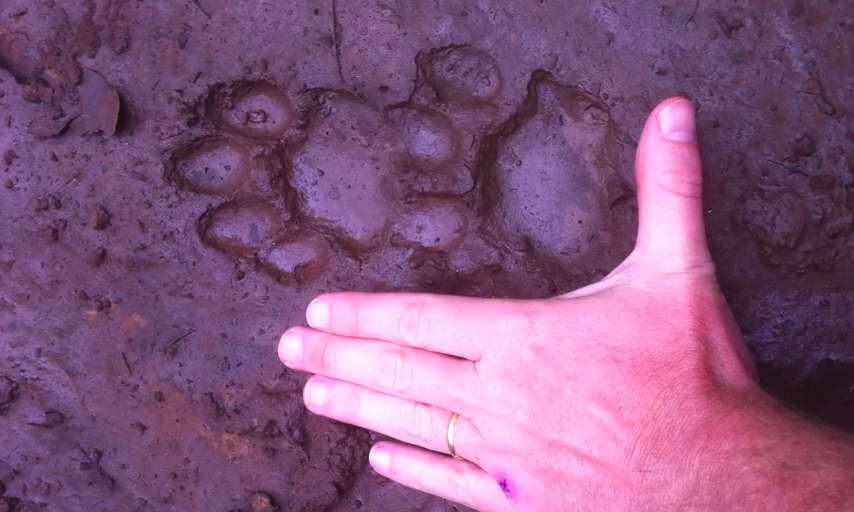
| Jaguar (Onça-pintada) | Rounded, no visible claw marks (retractable), large and lobed heel pad. | 8-10 cm wide | Often leaves a regular gait. Drag marks may be present if the animal is hunting. |
| Capybara | Shovel or fan-shaped, with four visible toes on the front track and three on the hind, no marked claws. | 7-9 cm long | Usually found near water. Often leave muddy trails. |
| Marsh Deer (Cervo-do-pantanal) | Elongated and cloven, with two well-defined hooves. | 6-8 cm long | Thin and long legs. The track may appear split. |
| Maned Wolf (Aguará-guazú) | Elongated and slender, similar to a large dog’s, with four toes and an oval heel pad. | 7-9 cm long | Very long legs, adapted for walking through tall vegetation. |
| Ocelot (Jaguatirica) | Small, rounded, similar to a domestic cat’s but larger, no claw marks. | 3-4 cm wide | Often found alone or in small groups. |
Appropriate Footwear: Waterproof and comfortable hiking boots to protect your feet and keep them dry in wet and muddy terrain.
Binoculars: Essential for observing wildlife from a distance without disturbing it, and for examining track details without getting too close.
Field Notebook and Pencil: To sketch and note down the characteristics of observed tracks, location, and environment.
GPS or Map App: To record locations of important findings and to avoid getting lost.
Camera: To document tracks and sighted wildlife.
Flashlight: Useful for tracking at dawn or dusk, times of high animal activity.
Insect Repellent: Indispensable in the Pantanal to protect against mosquitoes and other insects.
Be Patient and Observant: Tracking requires time. Take your time to examine every detail and don’t rush your conclusions.
Learn to Read the Terrain: Tracks are found on different substrates. Practice identifying them in mud, sand, dust, and leaf litter.
Understand Animal Habits: Knowing where certain animals tend to be (near water, in grazing areas, etc.) will help you focus your search.
Do Not Touch or Alter Tracks: Observe and document without modifying. Tracks are ephemeral.
Travel in a Group or Inform Your Route: For safety, it is advisable not to track alone, or at least inform someone of your itinerary and return time.
Respect Wildlife: Maintain a safe distance and never feed the animals.
Consult Local Guides: Their empirical knowledge is invaluable for accurate identification.
Frequently Asked Questions About Northern Pantanal Animal Tracks and Tracking in Brazil
Tracking footprints in the Northern Pantanal, as in any complex ecosystem, can raise questions. Below, we address some of the most common inquiries to help you better understand this fascinating activity and prepare for your next adventure of discovery in Brazil.
These answers aim to clarify practical and theoretical aspects of tracking, providing useful information for both beginners and enthusiasts with some experience in the Brazilian wilderness.
What is the most difficult animal to track by its footprints in the Northern Pantanal?
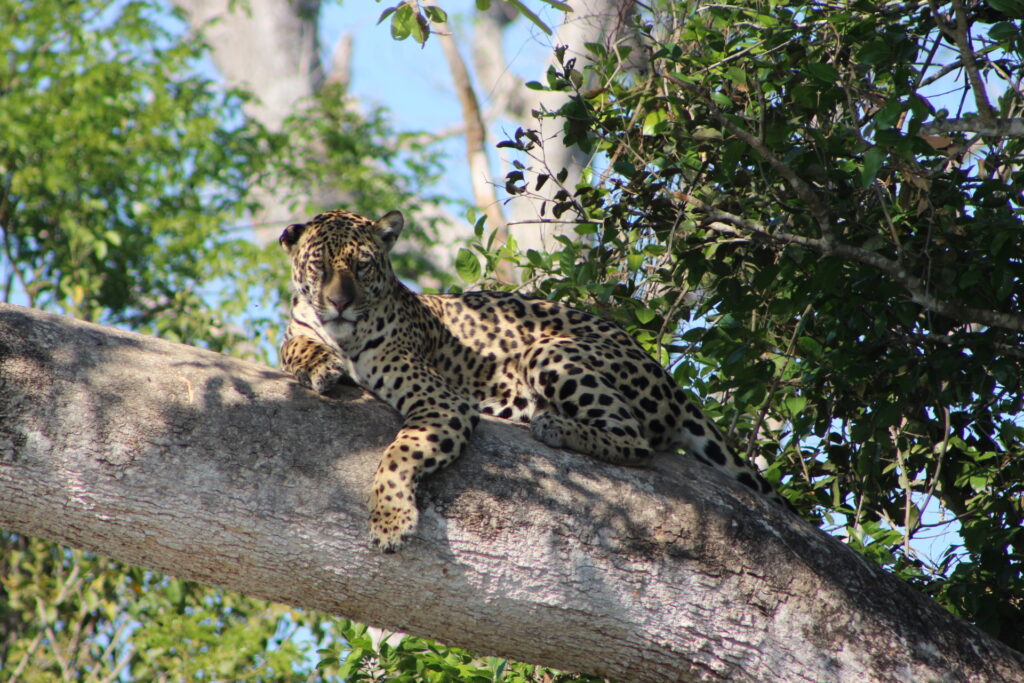
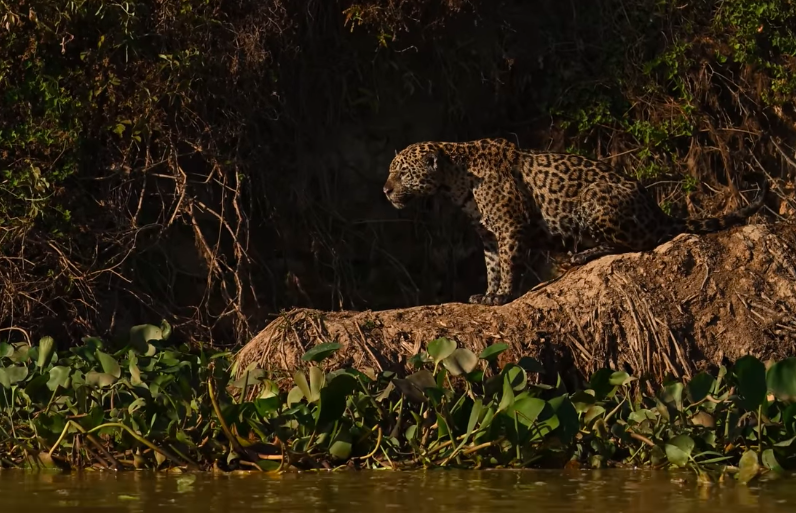
Undoubtedly, the jaguar (Panthera onca) is one of the most elusive animals and, therefore, difficult to track in the Northern Pantanal. Its solitary, territorial, and predominantly nocturnal or crepuscular nature means its tracks are found less frequently than those of other more diurnal or gregarious animals. Furthermore, jaguars often move stealthily through dense vegetation, leaving subtle or ephemeral traces.
The difficulty also lies in the need to distinguish its tracks from those of other felines, although in the Northern Pantanal, the jaguar is the largest feline. Experience and local knowledge are crucial for correctly interpreting the few clues they leave, such as tracks on muddy paths, riverbanks, or near their dens, which are usually difficult-to-access areas.
What time of year is best for tracking footprints in the Northern Pantanal?
The best time for tracking footprints in the Northern Pantanal generally coincides with the dry season, which runs approximately from May to October. During this period, water levels recede, forcing animals to congregate near remaining water sources, such as rivers and lagoons. This creates areas of exposed mud and sand, ideal substrates for the preservation and visibility of tracks.
In contrast, the wet season (approximately November to April) sees extensive flooding, making it difficult to observe tracks on the ground. However, animal activity can be intense in non-flooded areas, and tracks may be marked on elevated paths or in areas that temporarily dry out. The choice of season will depend on what type of tracks are sought and tolerance to climatic conditions.
Is a local guide necessary to identify animal tracks in Brazil?
While not strictly mandatory, hiring a local guide is highly recommended, especially for first-time visitors to the Northern Pantanal. Local guides possess deep, empirical knowledge of animal behavior, movement patterns, and the region’s specific habitats. They have spent years learning to interpret the subtle signs nature offers, including accurate track identification.
In addition to significantly improving the chances of spotting and correctly identifying tracks, a local guide ensures visitor safety. They know the safe areas, potential dangers, and how to react to wildlife encounters. Their expertise in reading the terrain and anticipating where to find tracks is invaluable, transforming an expedition into a much richer and safer experience.
How do you differentiate jaguar tracks from those of other large felines in the Pantanal?
The main difference between jaguar (Panthera onca) tracks and those of other large felines that might be found in the region (though the jaguar is the largest and most prevalent feline) lies in size and shape. Jaguar tracks are notably large and robust, with a wide, lobed heel pad. Typically, they show four well-defined toes, and most importantly, rarely exhibit claw marks, as these are retractable and only extend on slippery terrain or when hunting.
Other distinguishing features include the overall shape, which tends to be more round than oval, and the absence of a marked “M” on the heel pad, unlike some canids. The distance between tracks (stride) and how the animal places its paws are also indicators. A jaguar usually walks more directly, placing its hind paws in the front tracks to minimize noise and trace.
When comparing with smaller felines like the ocelot (Leopardus pardalis), the size difference is the most evident; ocelot tracks are considerably smaller. While both share the characteristic of not showing claws in their tracks, the magnitude of the mark is the key factor. Experience and direct comparison with known tracks are fundamental for accurate field identification, and the guidance of a local expert is an invaluable tool in this process.