 PT
 EN
 ES

Brazil, with its vast biodiversity, preserves one of the most incredible creatures: the anteater. With its elongated snout, distinctive fur, and sticky tongue, this mammal has become a symbol of Brazilian ecosystems, from the Cerrado savannas to the Amazon rainforests. Its presence not only enriches the local fauna but also plays a crucial role in ecological balance. Despite its imposing size, the anteater is a peaceful animal whose existence is intrinsically linked to the health of its environment. This article delves into the world of the anteater in Brazil, exploring its species, habits, importance, and the challenges it faces for survival.
Brazil, with its vast biodiversity, preserves one of the most incredible creatures: the anteater. With its elongated snout, distinctive fur, and sticky tongue, this mammal has become a symbol of Brazilian ecosystems, from the Cerrado savannas to the Amazon rainforests.
Its presence not only enriches the local fauna but also plays a crucial role in ecological balance. Despite its imposing size, the anteater is a peaceful animal whose existence is intrinsically linked to the health of its environment. This article delves into the world of the anteater in Brazil, exploring its species, habits, importance, and the challenges it faces for survival.
Giant Anteater in Brazil: A Gentle Giant
The giant anteater (Myrmecophaga tridactyla) is an emblematic figure of Brazilian megafauna, a true gentle giant roaming through the country’s diverse biomes. With a length that can exceed two meters, including its tail, and a weight of around 40 kilograms, its silhouette is unmistakable. Its diet consists almost exclusively of ants and termites, which it locates with its keen sense of smell and extracts with its long, sticky tongue, capable of flicking up to 150 times per minute.
The ecological importance of the giant anteater in Brazil is immense. It acts as a natural controller of insect populations, preventing ant and termite plagues from unbalancing ecosystems. Furthermore, by digging for food, it aerates the soil and disperses seeds, contributing to the health and regeneration of vegetation. Its presence is an indicator of a healthy and balanced ecosystem, making it a key species for the conservation of Brazilian biodiversity.
Anteater Species in Brazil: Diversity and Habitat
Brazil is home to three of the four anteater species that exist in the world, each adapted to different ecological niches and with particular characteristics. The giant anteater, the best known, inhabits mainly the Cerrado, the Amazon, and the Atlantic Forest. It is followed by the southern tamandua or lesser anteater (Tamandua tetradactyla), smaller and arboreal, found in a variety of habitats, including tropical forests and savannas.
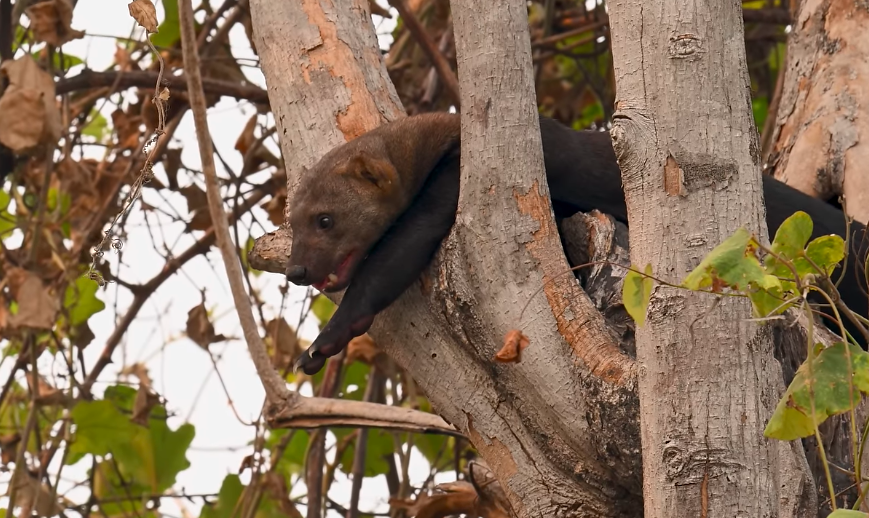
The third species present in Brazil is the northern tamandua (Tamandua mexicana), also known as the four-toed anteater, which shares its habitat with the southern tamandua in the Amazon region. Although less known, the silky anteater (Cyclopes didactylus) is the smallest and strictly arboreal species, inhabiting the treetops of the Amazon and Atlantic Forest, feeding mainly on ants and insect larvae.
- Giant Anteater (Myrmecophaga tridactyla): The largest, terrestrial, long snout, sticky tongue, diet of ants and termites.
- Southern Tamandua (Tamandua tetradactyla): Medium-sized, semi-arboreal, prehensile tail, mottled fur, varied diet of ants and termites, sometimes honey.
- Silky Anteater (Cyclopes didactylus): Small, completely arboreal, prehensile tail, silky fur, diet of ants and larvae.
Diet and Behavior of Anteaters in Brazil
The diet of anteaters in Brazil is highly specialized, focusing on the consumption of ants and termites. They use their powerful claws to break open the tough nests of these insects and their long, sticky tongue to capture thousands of prey in a single foraging session. A giant anteater can consume up to 30,000 insects per day, playing a vital role in controlling these populations.
Their behavior is predominantly solitary and crepuscular or nocturnal, although they can be active during the day in areas with little human disturbance. Despite their robust appearance, they are peaceful animals that avoid conflict. When threatened, they stand on their hind legs, using their strong foreclaws for defense, an impressive but rarely witnessed sight.
- Locates an ant or termite nest with its keen sense of smell.
- Uses its strong claws to dig and open the nest.
- Inserts its long, sticky tongue to capture thousands of ants or termites.
- Moves to another feeding site after consuming most of the insects, allowing the colony to regenerate.
Comparative Table: Giant Anteater vs. Northern Tamandua
| Characteristic | Giant Anteater (Myrmecophaga tridactyla) | Northern Tamandua (Tamandua mexicana) |
|---|---|---|
| Size | Large (up to 2.2 m total length, 40 kg) | Medium (up to 1.2 m total length, 7 kg) |
| Main Habitat | Cerrado, Amazon, Atlantic Forest (terrestrial) | Amazon, tropical forests (semi-arboreal) |
| Tail | Long and bushy, not prehensile | Short and prehensile (aids in climbing) |
| Diet | Mainly ants and termites | Ants, termites, insect larvae, sometimes honey and fruits |
| Activity | Mainly terrestrial, crepuscular/nocturnal | Semi-arboreal, nocturnal |
Conservation of Anteaters in Brazil: Threats and Efforts
Anteaters in Brazil face serious threats that endanger their survival. Habitat loss and fragmentation, due to agricultural expansion, deforestation, and urbanization, is perhaps the most critical challenge. This reduces the available areas for foraging and movement, and increases the likelihood of conflict with humans. Poaching, though less common for the giant anteater, remains a concern in some regions, as do roadkill incidents.
Fortunately, various conservation efforts are being implemented to protect these species. Non-governmental organizations, research institutions, and the Brazilian government collaborate on projects that include the creation and management of protected areas, restoration of degraded habitats, and the establishment of ecological corridors to facilitate wildlife movement. Scientific research plays a fundamental role in understanding populations, their needs, and the specific challenges they face.
Environmental education and public awareness are also essential pillars of conservation. Informing local communities about the ecological importance of the anteater and promoting sustainable practices helps reduce conflicts and fosters peaceful coexistence. Monitoring programs, such as the use of tracking collars and camera traps, allow for the collection of valuable data to guide the most effective conservation strategies and ensure that efforts reach the most vulnerable populations.
Frequently Asked Questions about Anteaters in Brazil
The anteater, with its peculiar appearance and ecological role, generates many questions. Below, we answer some of the most common queries about these fascinating creatures in the Brazilian context.
Why is the anteater important to Brazil’s ecosystem?
The anteater plays an irreplaceable ecological role as a regulator of ant and termite populations. By consuming large quantities of these insects, it prevents their populations from growing uncontrollably and causing significant damage to vegetation or human structures. Their digging activity also contributes to soil aeration and seed dispersal, promoting the health and regeneration of ecosystems.
In addition to its function as a pest controller, the presence of the anteater is a bioindicator of ecosystem health. Its dependence on specific habitats and abundant insect colonies means that its decline can signal broader environmental problems, such as soil degradation or general biodiversity loss.
Are anteaters dangerous to humans in Brazil?
Generally, anteaters are not dangerous to humans. They are peaceful and elusive animals that prefer to avoid contact. Their diet consists of insects, so they do not see humans as prey. However, if cornered or threatened, they can defend themselves using their powerful foreclaws, which are very sharp and can cause serious injuries.
Most negative encounters occur when the animals are surprised or feel endangered. It is important to maintain a safe distance and never try to corner or touch them. In Brazil, serious incidents are rare and usually result from reckless human intervention or an animal’s defensive action.
What is being done to protect anteaters in Brazil?
The protection of anteaters in Brazil involves a combination of strategies. Protected areas, such as national parks and biological reserves, are being expanded and strengthened to safeguard their natural habitats. Furthermore, projects for the restoration of degraded ecosystems are promoted, and efforts are underway to create ecological corridors that connect habitat fragments, allowing animals to move and maintain genetically viable populations.
Scientific research is crucial for better understanding the needs of these species. Studies are conducted on their movement patterns, diet, reproduction, and the specific threats they face in different regions of Brazil. This information is vital for designing and implementing effective management and conservation plans. Population monitoring using techniques like camera traps and fecal DNA analysis also helps assess conservation status.
Environmental education and awareness are key components. Campaigns are carried out to inform the public about the importance of the anteater and to promote practices that minimize conflicts, such as responsible driving on roads and preventing forest fires. Collaboration among governments, NGOs, local communities, and scientists is essential for the long-term success of conservation programs.
What is the main diet of anteaters in Brazil?
The main diet of anteaters in Brazil consists almost exclusively of ants and termites. They use their exceptional sense of smell to locate the nests of these insects, which can be underground, in mounds, or in trees. Once located, they use their strong foreclaws to break open the structures and access the colonies.
Their tongue, which can measure up to 60 centimeters, is extremely sticky and moves at an astonishing speed, capturing thousands of insects in each foraging session. A giant anteater can consume up to 30,000 insects in a single day. This specialized diet makes them key predators in regulating insect populations across Brazil’s diverse ecosystems.