 PT
 EN
 ES

The Brazilian Pantanal offers wildlife experiences for adventurers from all over the world. Porto Jofre, a destination that has earned a reputation as one of the best places on the planet to observe jaguars in their natural habitat.
The Brazilian Pantanal offers wildlife experiences for adventurers from all over the world. Porto Jofre, a destination that has earned a reputation as one of the best places on the planet to observe jaguars in their natural habitat.
This wildlife sanctuary not only promises close encounters with the majestic feline but also provides an opportunity to learn about this ecosystem. The adventure begins long before reaching the riverbanks, as access to Porto Jofre is, in itself, a fascinating expedition.
Jaguar Safari in Porto Jofre via the Transpantaneira: An Unforgettable Adventure
The concept of a “Jaguar Safari” in Porto Jofre centers on observing jaguars in their natural environment, primarily along the rivers that wind through the region. The Transpantaneira, an iconic dirt road that crosses the heart of the Pantanal, acts as the main access route to this paradise. This road, more than just a route, is a gateway to a wild world where life unfolds without restrictions.
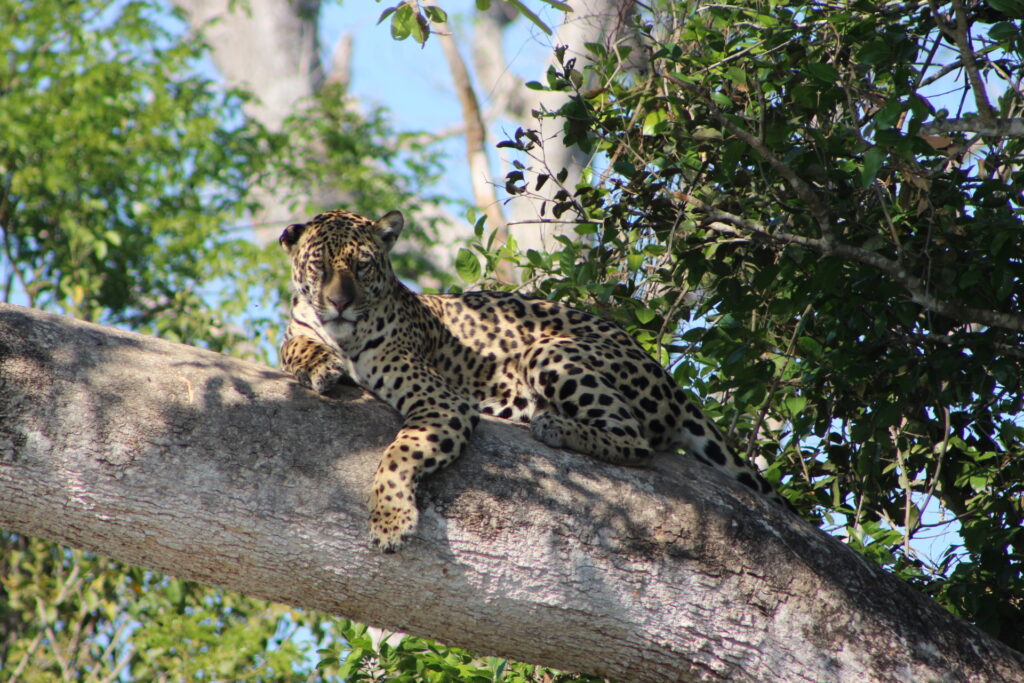
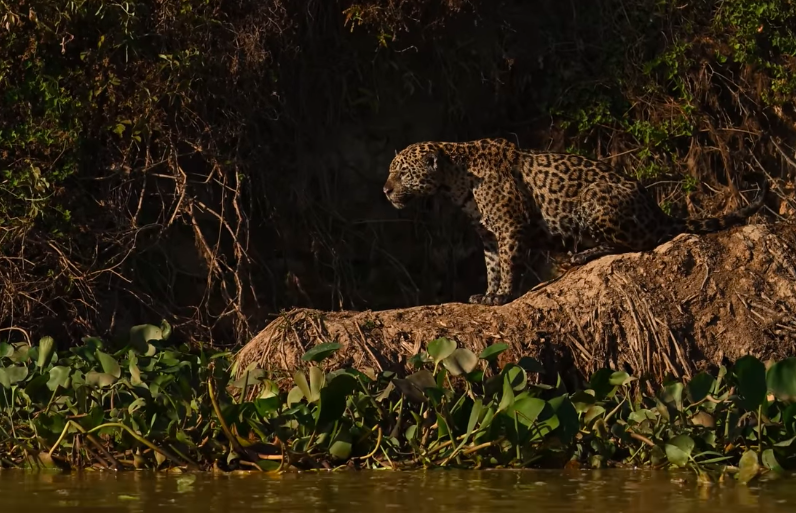
The experience of a Jaguar Safari in Porto Jofre is unique. Unlike other safaris where animals might be hidden in dense vegetation, here, jaguars are often found resting on riverbanks or hunting, allowing for spectacular sightings from boats. The combination of the scenic Transpantaneira route and the promise of encounters with the largest cat in America creates an unforgettable adventure for any nature lover.
The Best Time for Your Jaguar Safari in Porto Jofre via the Transpantaneira
Determining the ideal season for your Jaguar Safari in Porto Jofre via the Transpantaneira is crucial to maximize your chances of sightings. Generally, the dry season, which runs from June to October, is considered the most favorable. During these months, the water levels of the rivers drop significantly, forcing jaguars to congregate near the remaining water sources to hunt, making them more visible.
On the other hand, the rainy season, from November to May, has its own charms. Although the rising water levels can make navigation difficult in some areas, the vegetation becomes lush, and the abundance of prey attracts a wide variety of fauna. Expert guides know how to navigate these conditions to find jaguars, and fewer tourists can offer a more intimate experience. Both seasons offer opportunities, but the dry season is usually preferred for its high probability of sightings.
What to Expect During Your Jaguar Safari in Porto Jofre via the Transpantaneira
A typical Jaguar Safari in Porto Jofre takes place mainly aboard motorboats navigating the Cuiabá, Três Irmãos, and São Lourenço rivers. These boats, piloted by experienced guides knowledgeable about jaguar behavior, offer stable and safe platforms for observation. Anticipation is part of the magic; every bend in the river could reveal the elusive feline resting on the bank, sunbathing, or even hunting.
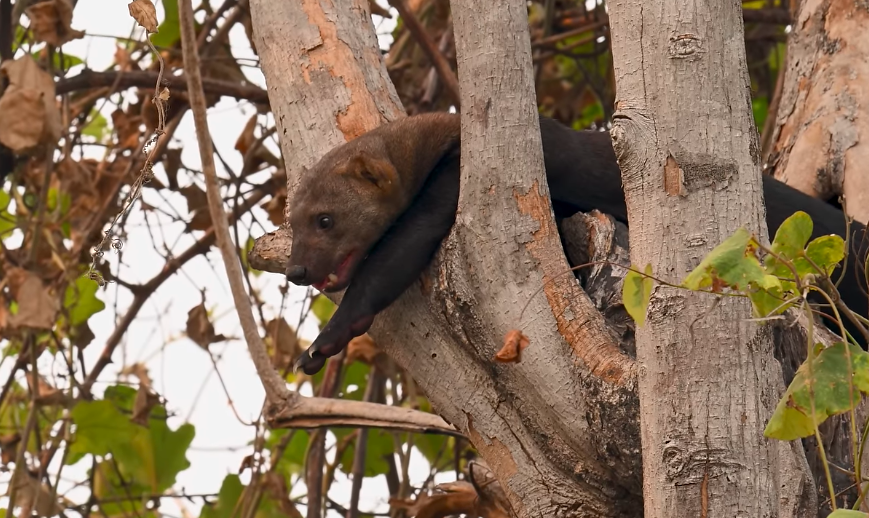
However, the adventure is not limited to the search for the jaguar. The Pantanal is a feast for the eyes, and during your safari, you will find yourself surrounded by an incredible diversity of wildlife. Capybaras, the world’s largest rodents, are often seen grazing peacefully on the banks. Caimans lie motionless in the shallow waters, perfectly camouflaged. Furthermore, the birdlife is spectacular, with herons, kingfishers, toucans, and macaws painting the sky with their vibrant colors.
The thrill of each sighting, whether it’s a playful group of otters, a majestic caiman, or, with luck, the stealthy appearance of a jaguar, makes every moment precious. Guides use binoculars and their keen knowledge of the terrain to locate animals, sharing fascinating information about their habits and the ecosystem. Patience is rewarded, and the connection with wild nature reaches its peak when you manage to spot this magnificent predator.
| Safari Option | Typical Duration | Boat Type | Main Focus | Included Services |
|---|---|---|---|---|
| Full-Day Safari | 8-10 hours | Speedboat | Jaguar and general wildlife spotting | Lunch, guide |
| Half-Day Safari | 4-5 hours | Boat | Jaguar spotting in specific areas | Snacks, guide |
| Multi-Day Expedition | 3-5 days or more | Hotel Boat or Speedboats | Deep immersion, intensive jaguar search, exploration of different rivers | Accommodation, all meals, guides, activities |
| Private Safari | Flexible | Private Boat | Personalized experience, focus on specific interests | Dedicated guide, tailor-made itinerary |
Essential Tips for Your Jaguar Safari in Porto Jofre via the Transpantaneira
To ensure the most pleasant and fruitful Jaguar Safari experience in Porto Jofre via the Transpantaneira, preparation is key. Pack light, neutral-colored clothing that blends with the environment; avoid bright colors. Include long pants and long-sleeved shirts to protect yourself from the sun and insects. Don’t forget a wide-brimmed hat, sunglasses, and high-factor sunscreen. A good insect repellent is essential, especially at dawn and dusk.
Regarding equipment, a camera with a good zoom is essential for capturing wildlife at a distance. Consider bringing binoculars for better observation. Reusable water bottles are important to stay hydrated, and a small backpack will allow you to carry your essentials. Safety is paramount; always follow your guide’s instructions, do not lean too far over the side of the boat, and keep your belongings secure. Listen carefully to instructions on where and how to observe animals safely and respectfully.
To maximize your chances of sightings, be patient and flexible. Jaguars are elusive animals, and their appearance is not guaranteed, but persistence and choosing the right times of day (early morning and late afternoon are usually the most active) increase your odds. Consider going on safaris at different times of the day or for several consecutive days. Respectful interaction with local guides can also be very beneficial, as their knowledge of the territory and animal habits is invaluable.
Frequently Asked Questions about Jaguar Safari in Porto Jofre via the Transpantaneira
Taking a Jaguar Safari in Porto Jofre via the Transpantaneira is an exciting experience that raises many questions. Here we address some of the most common ones to help you plan your adventure in this incomparable corner of the Brazilian Pantanal, ensuring you are well-prepared to make the most of it.
Is it safe to go on a Jaguar Safari in Porto Jofre via the Transpantaneira?
Yes, a Jaguar Safari in Porto Jofre via the Transpantaneira is generally very safe when proper precautions are taken and professional guide instructions are followed. Excursions are conducted on boats designed for river navigation, and the captains and guides have vast experience in handling these waters and observing wildlife. They know the behavior of jaguars and other animals and how to maintain a safe distance.
It is essential to obey safety instructions on board, such as not standing up unnecessarily, keeping hands and feet inside the boat, and not attempting to feed or approach animals too closely. Responsible tour operators prioritize the safety of their clients and the well-being of the wildlife, ensuring the experience is exciting but controlled. The key lies in trusting the professionals’ experience and respecting the established rules for interacting with wild nature.
What is the probability of seeing a jaguar in Porto Jofre?
Porto Jofre is world-renowned for having one of the highest jaguar sighting rates on the planet, especially during the dry season (June to October). Many visitors are fortunate enough to see at least one jaguar, and some even spot several during their stay. The probability increases significantly if several days are dedicated to the search and different stretches of the rivers are explored.
Factors such as the time of year, water levels, jaguar hunting activity, and the guide’s ability to locate them influence the chances. While a 100% sighting cannot be guaranteed, Porto Jofre offers the best conditions for it. Patience and perseverance are important virtues; even if you don’t see a jaguar, the abundance of other fascinating species ensures a rewarding experience.
What photographic equipment is recommended for a Jaguar Safari in Porto Jofre via the Transpantaneira?
To capture the magnificence of jaguars and the rich wildlife of the Pantanal, versatile photographic equipment is recommended. A digital SLR (DSLR) or mirrorless camera with interchangeable lenses is ideal. A long telephoto lens (such as a 70-300mm or 100-400mm) is almost indispensable for getting close-ups of animals without disturbing them. Lenses with wide apertures (f/2.8 or f/4) are beneficial for low-light conditions, common at dawn and dusk.
In addition to the camera and lenses, consider bringing extra batteries and memory cards, as photography opportunities can be abundant and prolonged. A tripod or monopod can be useful for stabilizing shots with long telephoto lenses, although on a boat, a beanbag might be more practical for supporting the camera. A polarizing filter can help reduce water glare and saturate landscape colors. Don’t forget to protect your equipment from moisture and dust.
How long is recommended for a Jaguar Safari in Porto Jofre via the Transpantaneira?
To have an optimal experience and maximize the chances of seeing jaguars, it is recommended to dedicate at least three full days to a Jaguar Safari in Porto Jofre via the Transpantaneira. This period allows for exploring different areas along the rivers, adapting to nature’s rhythms, and increasing the probability of encountering the elusive felines at different times of the day.
If time permits, extending the stay to four or five days can offer an even deeper immersion into the Pantanal ecosystem, allowing not only for a higher chance of seeing jaguars but also for observing other fascinating species, enjoying the changing landscapes, and experiencing the tranquility of the environment. A single-day safari can be frustrating due to the unpredictable nature of wildlife.